

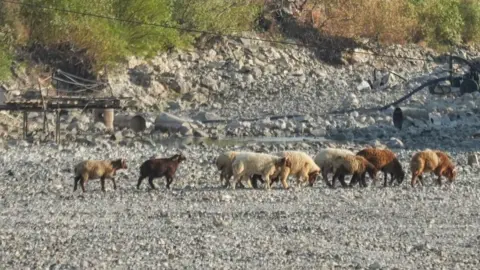
Outside a rural area by central Syria, wheat fields ought to be ripe and productive with crops.
Yet, one agriculturist's land remains dry, yielding only a portion of its normal output.
"Recently was disastrous because of the drought," explained the middle-aged cultivator.
The fields generated merely 190kg per plot—well under the expected quantity seen in a good year.
"{We haven't recovered what we invested; we've faced losses. It's impossible to fund next season's crops," he added.
With a pair of young daughters to feed, he is seeking funds from kin to survive.
Countrywide Crisis
The plight is repeated across Syria, where the gravest dry period in 36 years has reduced wheat harvests by a significant portion.
A estimated deficit of 2.73 million tonnes is predicted this year—enough to feed the yearly dietary needs of more than 16.25 million Syrians.

Growing Hunger
Lacking more assistance or the ability to bring in grains, the crisis may intensify dramatically.
Over millions of Syrians—nearly six in ten the population—currently struggle to eat enough.
Out of these, 9.1 million face acute malnutrition, including over a million in extreme states.
Precipitation has fallen by about 70%, damaging the majority of non-irrigated farmland.
"This is the distinction between households remaining in their villages or having to leave," noted an official.
Household Struggles
Rural communities are parting with herds to compensate for reduced revenue, reducing their food intake.
Hunger-related issues levels among young ones and expectant mothers are growing.
Grain is a essential crop in Syria, used for loaves and traditional dishes—cheap foods that are now increasing in value.
For a mother who is 39, buying food has become increasingly hard.
Having several children, she counts on her sons' salaries, which are not daily expenses.
"Occasionally we borrow money simply to purchase food," she shared.
Last year, a package of flatbread cost five hundred local currency, but today it is much more.
To provide for her household, she needs two units a daily—a financial burden of nine thousand currency units, not including other necessities.
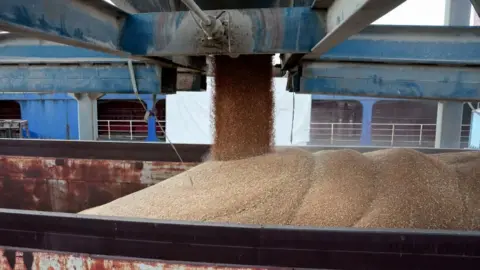
Government and Global Efforts
This emergency presents a major obstacle for the government, which is attempting to restore the nation after a long period of conflict.
Support groups are providing food support for those in need, but representatives warn that these are stopgap solutions.
"We're trying to keep agricultural workers in the agricultural industry," said a program director.
Financial payments have been given to small farmers who suffered the whole harvest.
But, after over a decade of strife, Syria's agricultural industry was already impacted by financial collapse, damaged irrigation systems, and contaminated fields.
Resource Shortage
Within critical farming zones, wheat land must have multiple watering cycles per season, but as a result of shortage of rain, the majority of growers cannot manage.
"The farmer's primary worry is securing water," stated a local agriculture director.
Irrigation requires diesel, and costs have skyrocketed significantly, hitting 11,000 to twelve thousand pounds per litre.
High energy costs and regular power cuts have left water pumps out of reach for most agriculturalists.
Future Options
One priority for the government is developing water infrastructure—like eco-friendly irrigation systems—to provide resources more available.
Yet such plans take years and funding—advantages that agricultural workers cannot access right now.
Therefore, for millions citizens around the country, there is just one option to count on in the upcoming period: hope for rain.


